
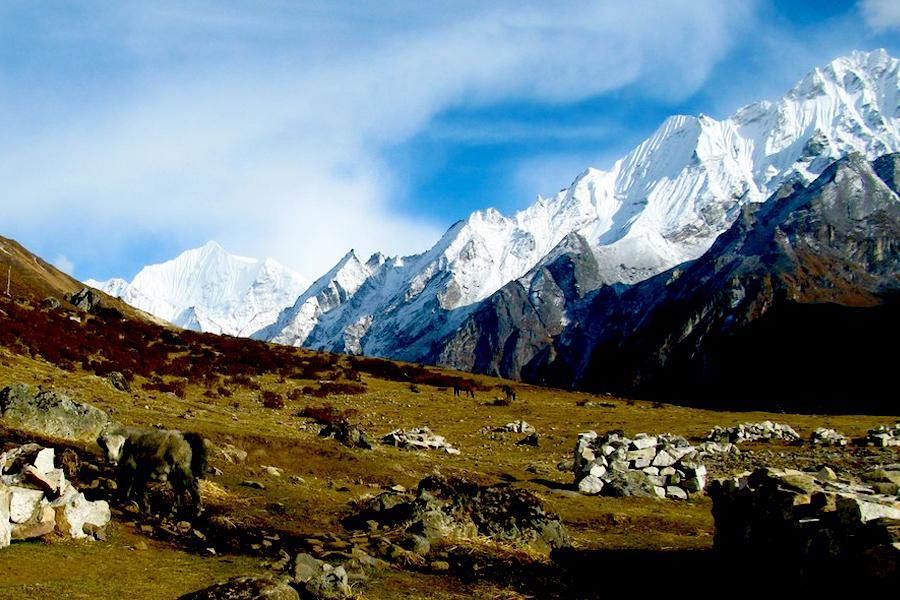









The Ultimate 7-Day Langtang Trek Journey to the Valley of Glaciers
"The Valley of Glaciers Awaits"
Langtang Trek; There is a unique silence in the Langtang Valley, a profound stillness that only breaks when the wind whips through the ancient prayer flags or the distant rumble of a glacier echoes off the canyon walls. Likely having walked these trails for over a decade, I can tell you that the Langtang Trek is not merely a hiking route; it is a pilgrimage into the heart of Nepal’s natural and spiritual grandeur. Often overshadowed by the commercial bustle of Everest or the Annapurnas, Langtang offers a raw, authentic experience where the mountains meet the sky in a dramatic display of alpine beauty.
The Langtang Trek 7-day route is pretty straightforward, offering trekkers an accessible yet deeply rewarding immersion into the Himalayas. Unlike other teahouse treks that might feel like a conveyor belt of tourists, Langtang retains a sense of solitude and untouched wilderness. From the bustling streets of Kathmandu to the high-altitude pastures of Kyanjin Gompa, this trek challenges the body and soothes the soul. Whether you are a seasoned hiker looking for a quick escape or a first-timer eager to test your limits, the Langtang Trek provides the perfect blend of adventure, culture, and breathtaking scenery.
In this comprehensive guide, we will traverse every meter of the trail with you. We will explore the hidden teahouses, the Tamang culture, the tragic yet resilient history of the region, and the logistical details you need to know. We will also compare this route with the rugged Kanchenjunga trek and provide a month-by-month weather analysis to help you plan your perfect expedition.
The Soul of the Himalayas: Why Choose the Langtang Trek?
A Trek of Resilience and Renewal
The Langtang Valley holds a special place in my heart. It is a place of incredible resilience. In 2015, a massive earthquake triggered a landslide that buried the original village of Langtang. The loss was devastating, but the spirit of the Tamang people was unbreakable. Today, the Langtang Trek is a story of rebirth. The village has been rebuilt slightly higher, and the community has opened its arms to the world once more. By trekking here, you are not just a tourist; you are a supporter of a community that is rising from the ashes.
The Tamang Heritage Trail
One of the distinct features of the Langtang Trek is the deep cultural immersion. The region is inhabited by the Tamang people, an ethnic group with Tibetan roots, known for their warm hospitality, rich traditions, and colorful dress. Their language, dress, and religion are closely linked to Tibet, yet they have a distinct identity that flourishes in these high valleys. As you walk, you will see chortens (Buddhist shrines) and mani walls (stone walls carved with prayers) at every turn, reminding you that you are walking through a sacred landscape.
Accessibility Meets Wilderness
For many trekkers, the Langtang Trek strikes the perfect balance between accessibility and wilderness. Unlike the Manaslu Circuit or Kanchenjunga, which require restricted area permits and weeks of time, Langtang is accessible and open. You do not need a tent or a massive expedition team. The route is clearly marked and is filled with various teahouses run by Tamang natives. This accessibility does not detract from the experience; rather, it allows you to focus on the trekking, the views, and the people, knowing that a warm cup of tea and a comfortable bed await you at the end of the day.
7-Day Langtang Trek Itinerary: A Day-by-Day
We begin our journey from the capital city of Kathmandu. The following itinerary is designed to maximize acclimatization while ensuring you experience the very best of the valley.
Day 1: The Scenic Drive from Kathmandu to Syabrubesi
On our first day, we will drive northbound, following the mighty Trishuli River. Our drive will last for at least 7-8 hours before reaching Syabrubesi, a small riverside town located at the confluence of the Langtang and Bhotekoshi rivers. While some might find the long drive tedious, I always advise trekkers to sit back and enjoy the changing landscape. As we leave the Kathmandu valley, the traffic thins out, and the road clings to the hillsides, offering glimpses of the terraced fields and rushing rivers below.
We stop for a traditional Nepali lunch (Dal Bhat) in Trishuli Bazaar or Dumre. As we ascend towards Syabrubesi, the air grows cooler, and the vegetation becomes lush and subtropical. Syabrubesi itself is a bustling trading post where you can see mules carrying goods up the trail. It’s a humbling reminder that for many here, these trails are highways of necessity, not just leisure.
Overnight: Syabrubesi (1,550m)
Meals: Lunch, Dinner
Day 2: Syabrubesi to Lama Hotel – Entering the Canyon
Waking up to the sound of the Bhotekoshi River, we begin our trek. The trail starts with a steep climb out of Syabrubesi, crossing a suspension bridge over the Bhote Kosi. We then followed alongside the Langtang River to reach the Lama Hotel. The trail initially winds through a subtropical forest filled with ferns and oaks. Keep your eyes peeled for the Red Panda; while elusive, this region is one of their last strongholds.
As we climb, the landscape changes. The river becomes a raging torrent far below, confined within a deep gorge. The trail hugs the cliff face, offering thrilling views. We pass through small settlements like Bamboo and Rimche. The sound of the Langtang River is your constant companion, a white noise that blocks out the world.
Lama Hotel stands as a small hamlet located in a deep gorge between two rocky cliffs. It’s a welcome stop after a solid 6-7 hours of trekking. Here, the air is fresh and crisp, smelling of pine and damp earth. It’s the perfect place to rest your legs and prepare for the ascent ahead.
- Overnight: Lama Hotel (2,380m)
- Meals: Breakfast, Lunch, Dinner
Day 3: Lama Hotel to Langtang Village – Into the Alpine
Today, the real altitude begins. The trail climbs steadily from the gorge. From here, the flat river basin of Langtang River begins. We leave the dense lower forests behind and enter the realm of the rhododendron and oak forests. If you are trekking in spring (March-April), the hillsides are ablaze with red and pink rhododendrons, the national flower of Nepal.
Our trail then steadily follows through small hamlets like Ghodatabela and Thangshyap. Ghodatabela, meaning “Horse Stable,” was once a major rest stop for traders. Today, it serves as a checkpoint for the Langtang National Park entry.
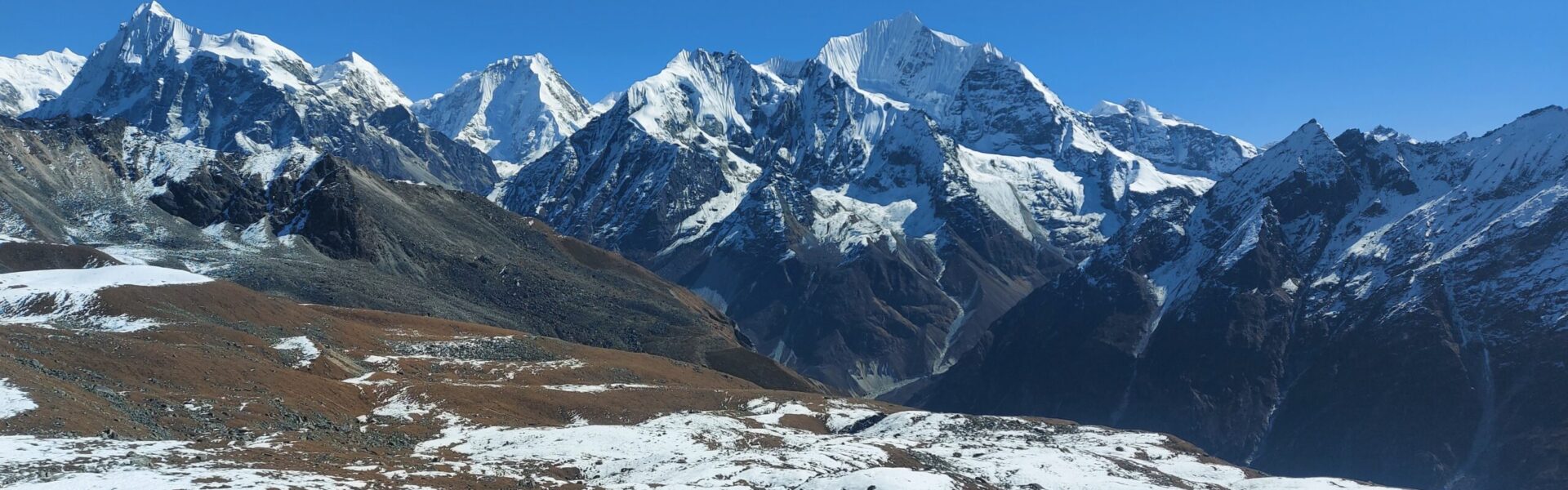
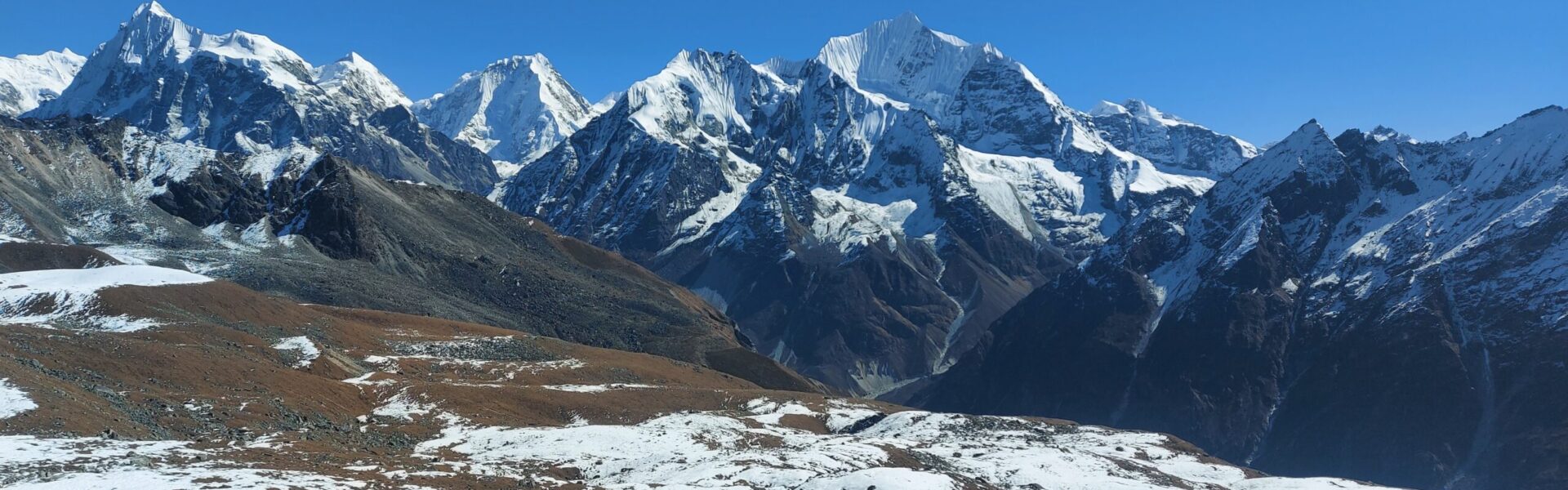
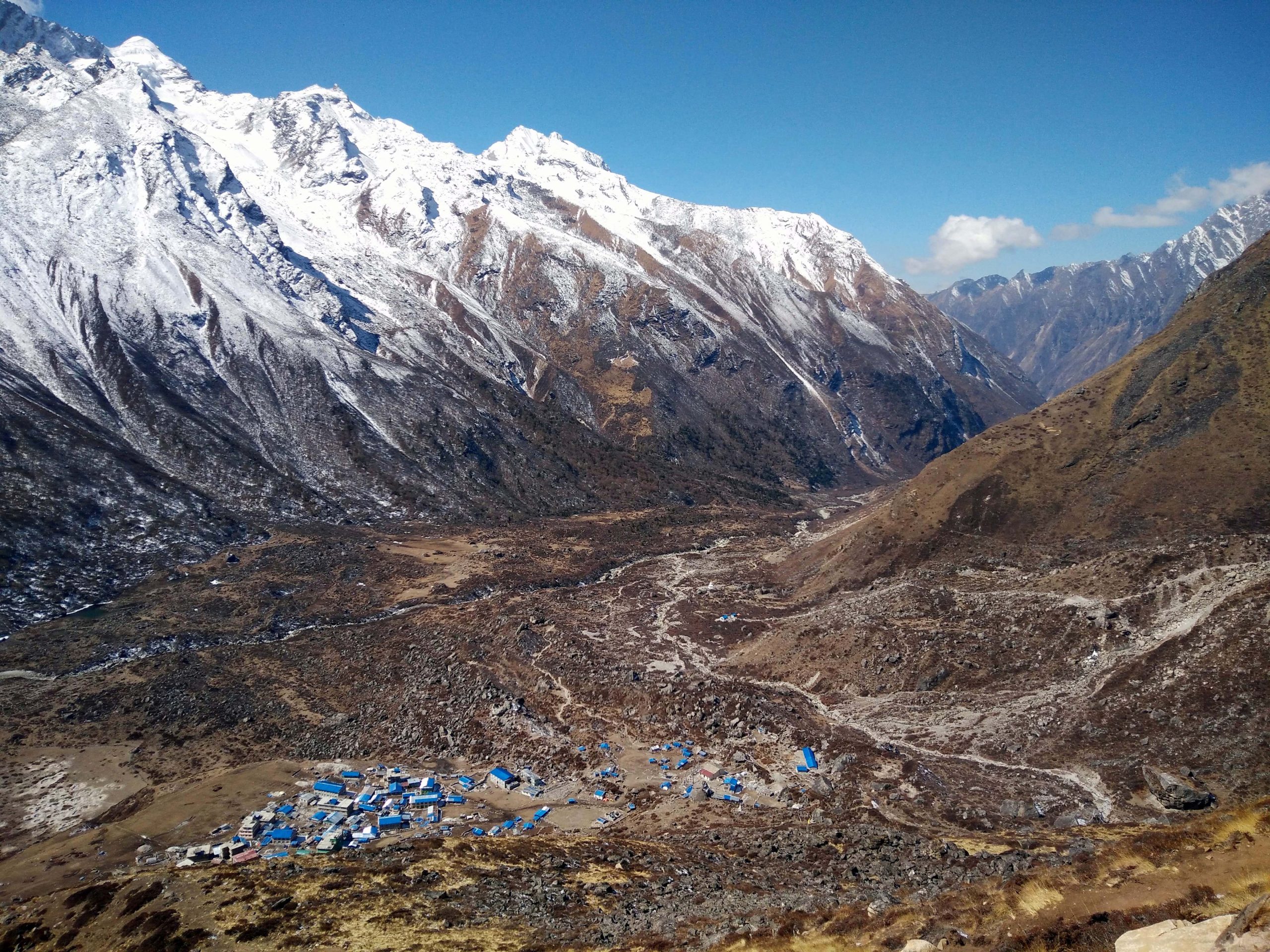
The walk is long but gradual. As we approach Langtang village, the valley opens up dramatically. We pass through the colossal debris of a landslide triggered by a 2015 earthquake in the area. It is a somber sight, a massive scar on the mountain that reminds us of the power of nature. However, just past this, the new village rises. From Langtang, we will have mesmerizing views of the Langtang mountains. The view of Langtang Lirung (7,227m) towering above the village is simply majestic.
- Overnight: Langtang Village (3,430m)
- Meals: Breakfast, Lunch, Dinner
Day 4: Langtang Village to Kyanjin Gompa – The High Himalayas
The pathway from this village is flattened, making the walk to Kyanjin Gompa a joy despite the thinning air. We cross a few wooden bridges and climb gently through yak pastures. Yaks are the lifeline of this valley, used for transport and milk. Seeing them graze against the backdrop of snow-capped peaks is a quintessential Himalayan image.
We arrive at Kyanjin Gompa by lunchtime. This is our final stopover and the spiritual heart of the valley. Kyanjin Gompa is a beautiful monastery surrounded by snow-capped peaks. The vibe here is incredibly peaceful. The afternoon is free to explore. We can visit the cheese factory here, famous for its yak cheese, or hike up to the glacier viewpoint. The altitude is noticeable here (3,850m), so it is crucial to take it slow and hydrate well.
- Overnight: Kyanjin Gompa (3,850m)
- Meals: Breakfast, Lunch, Dinner
Day 5: Acclimatization Day – Kyanjin Ri (4,773m)
This is the highlight of the trek for many. We do not stay in the valley floor; we climb. Our goal is Kyanjin Ri 4773m, our final viewpoint. The hike is steep and challenging. As we ascend, the grass gives way to scree and snow. Every step requires a bit more effort than the last due to the low oxygen levels.
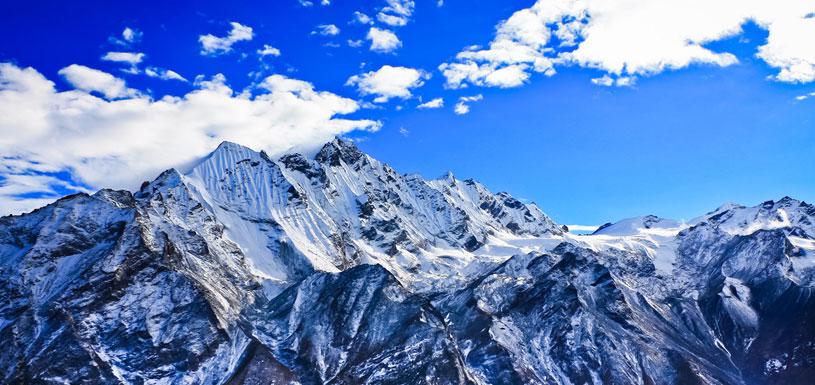
But the view from the top is indescribable. You are standing in a amphitheater of giants. To the north, you see the massive glaciers flowing down from Langtang Lirung. To the south and east, peaks like Dorje Lakpa and Ganesh Himal pierce the sky. It is a 360-degree panorama of white and rock. It is here, amidst the silence of the peaks, that you understand why the Tamang people consider these mountains sacred.
We spend time at the top taking photos and soaking it in before descending back to Kyanjin Gompa. The descent is easy on the legs and feels great as the air thickens.
- Overnight: Kyanjin Gompa (3,850m)
- Meals: Breakfast, Lunch, Dinner
Day 6: Kyanjin Gompa to Lama Hotel – The Descent
After a week of climbing, our muscles appreciate the descent. We retrace our steps down the valley. The walk down is faster, but it requires care to avoid slipping on loose stones. We pass through Langtang Village again, often stopping for a tea to chat with the locals.
Walking downhill changes your perspective. You notice things you missed on the way up—the vibrant blue of the river, the specific call of a particular bird, the intricate carvings on the mani walls. We reach Lama Hotel by afternoon, tired but fulfilled. It feels warmer here, a sign that we are returning to the lower altitudes.
- Overnight: Lama Hotel (2,380m)
- Meals: Breakfast, Lunch, Dinner
Day 7: Lama Hotel to Syabrubesi and Return to Kathmandu
Our final day on the trail is a short hike down to Syabrubesi. We enjoy a leisurely breakfast at Lama Hotel, perhaps savoring the view of the gorge one last time. The descent to Syabrubesi takes about 3-4 hours.
Once in Syabrubesi, we board our jeep for the drive back to Kathmandu. The ride back is a time of reflection. We leave the mountains behind, carrying their silence with us into the chaotic energy of Kathmandu. We arrive in Kathmandu in the late afternoon, ready for a hot shower and a celebratory dinner.
- Overnight: Kathmandu (Your Hotel)
- Meals: Breakfast, Lunch
Detailed Packing List for the Langtang Trek
Packing smart is the difference between a comfortable trek and a miserable one. Even though the Langtang Trek is a teahouse trek, you need to be prepared for changing weather conditions.
Essential Gear
-
- Backpack: A comfortable 40-50L backpack (or a duffel bag if you have a porter).
- Daypack: 20-30L for carrying water, snacks, and layers during the day.
- Sleeping Bag: Rated to -10°C (14°F). Even in teahouses, it gets cold at night.
- Trekking Poles: Highly recommended for saving your knees on the descent.
Clothing (Layering System)
-
- Base Layers: 2-3 pairs of moisture-wicking t-shirts (no cotton!).
- Insulation Layer: A fleece jacket or pullover. A down jacket is essential for Kyanjin Gompa and evenings.
- Outer Shell: A waterproof and windproof hard-shell jacket and trousers.
- Trekking Trousers: 2 pairs. Quick-dry synthetic material is best.
- Underwear & Socks: 4 pairs of thick wool or trekking socks (Merino wool is excellent). Good underwear to prevent chafing.
- Headwear: A warm beanie and a sun hat.
- Handwear: Warm gloves (waterproof is a plus).
Footwear
-
- Hiking Boots: Sturdy, broken-in, waterproof boots with good ankle support.
- Camp Shoes/Sandals: Light sneakers or flip-flops for wearing in the teahouses.
- Gaiters: Optional, but good for keeping dust and mud out of boots.
Health & Hygiene
-
- Sun Protection: High SPF sunscreen, sunglasses (UV protected), and lip balm.
- Water Purification: Water purification tablets or a SteriPEN (plastic bottles are available along the way, but we encourage eco-friendly practices).
- First Aid Kit: Blister plasters (Compeed), painkillers (Ibuprofen), band-aids, antiseptic cream, and any personal medications.
- Toiletries: Hand sanitizer, wet wipes, toilet paper (teahouses provide some, but it runs out), toothbrush, and toothpaste.
- Quick Dry Towel: Microfiber towels are lightweight and dry fast.
Langtang Trek vs. Kanchenjunga Trek: A Comparative Analysis
Many trekkers ask me how the Langtang Trek compares to the Kanchenjunga Trek. Both are spectacular, but they offer vastly different experiences.
1. Accessibility and Logistics
-
- Langtang: It is incredibly accessible. A day’s drive from Kathmandu gets you to the trailhead. The permits are simple (Langtang National Park Entry Permit and TIMS Card). The infrastructure is well-developed, with comfortable teahouses at every stop.
- Kanchenjunga: Located in the far east of Nepal, reaching the trailhead requires a flight to Biratnagar and a long drive or another flight. It requires a Restricted Area Permit (RAP), which costs significantly more and requires you to travel with a registered guide and at least two trekkers in a party. The logistics are complex and time-consuming.
2. The Trekking Experience and Terrain
-
- Langtang: The Langtang Trek 7 days route is pretty straightforward, with not many divergent trails in between. The trail is well-graded, though it climbs steeply out of the gorge. It is an excellent introductory trek to high altitude.
- Kanchenjunga: This is a rugged, remote expedition. The trails are often rougher, less maintained, and involve long, strenuous days. The sense of isolation is profound; you may go days without seeing other trekkers. It is suited for experienced hikers looking for off-the-beaten-path adventure.
3. Scenery and Culture
-
- Langtang: The scenery is characterized by deep gorges, glacial valleys, and soaring peaks like Langtang Lirung. The culture is predominantly Tamang, with strong Tibetan influences.
- Kanchenjunga: This is a massive massif. You see the world’s third-highest peak up close. The trek passes through a variety of ecosystems, from tropical lowlands to high alpine passes. The cultural mix is richer, including Limbu, Rai, and Sherpa communities.
- Verdict: If you have 7-10 days and want a cultural, scenic trek with good logistics, choose Langtang. If you have 20-25 days, crave isolation, and want to experience the raw power of an 8,000-meter peak, Kanchenjunga is the choice.
Weather Guide: Month-by-Month Breakdown for Langtang Trek
Understanding the weather is key to a successful Langtang Trek. The Himalayas have their own moods.
Pre-Monsoon (Spring): March to May
-
- March: The rhododendrons start blooming. The lower valleys are colorful, but higher up, there may still be snow.
- April: The best month for flowers. The weather is stable, and the views are clear. It can get a bit busy.
- May: Warmer temperatures, but the haze starts to build up in the lower valleys before the monsoon hits. The higher regions are still fantastic.
Monsoon: June to September
-
- June to Early September: The monsoon brings heavy rain. The leeches are prevalent in the lower sections (Bamboo to Lama Hotel). Trails can be slippery and dangerous. However, the valleys turn lush green, and the waterfalls are spectacular. It is generally not recommended for trekking unless you are prepared for wet conditions.
Post-Monsoon (Autumn): October to November
-
- October: The most popular month. The rains wash away the dust, leaving crystal clear skies. The mountain views are breathtaking. The nights are cold, but the days are pleasant.
- November: The air gets colder, and the nights at Kyanjin Gompa can drop well below freezing. However, the trails are quieter, and the visibility remains excellent.
Winter: December to February
-
- December: Cold. The trails are quiet. The high passes like Lauribina La (if doing Gosainkunda) might be blocked by snow, but the main Langtang valley is usually open.
- January/February: The coldest months. Kyanjin Gompa is frozen. You must have excellent gear. However, the skies are the clearest of the year, offering sharp contrasts of white peaks against blue skies. It’s a tough but rewarding time to visit.
Langtang Trek: Why Trust Himalayan Eco Culture?
Experience: Walking the Walk
I am Deep Rai, and along with my team at Himalayan Eco Culture, I have spent years traversing the trails of Nepal. We don’t just sell the Langtang Trek; we live it. We know exactly which teahouse serves the best Dal Bhat, where the Red Pandas are most likely to be seen, and how to read the weather changes on the face of Langtang Lirung. Our itineraries are based on real-time, first-hand experience, not just Google searches.
Expertise: Local Knowledge and Safety
Our guides are locals from the Tamang and Sherpa communities. They speak English fluently and have an intimate knowledge of the flora, fauna, and geology of the region. They are trained in First Aid and High Altitude Medicine. Safety is our non-negotiable priority. We strictly monitor acclimatization schedules to ensure you enjoy the trek without falling ill to AMS (Acute Mountain Sickness).
Authoritativeness: A History of Excellence
We are a registered trekking agency in Nepal, adhering to all government regulations and standards. Also, we are committed to sustainable tourism practices. We support the “Leave No Trace” principles, ensuring that the beauty of the Langtang Valley remains pristine for future generations.
Trust: Transparency and Integrity
We believe in honest pricing. There are no hidden fees or surprise upsells on the trail. From your airport pickup in Kathmandu to your drop-off at the end of the trek, we handle everything. You can trust us to be there for you, 24/7, throughout your journey.
Safety and Sustainability Policy
Our Safety Pledge; Your safety is paramount. We carry comprehensive First Aid kits and oxygen cylinders on every trek. We assess the health of every client daily. If our guides deem it unsafe for you to continue due to altitude sickness, then we will prioritize your health and arrange for immediate descent or evacuation. This uncompromising stance on safety has given us a 100% safety record on our commercial treks.
Sustainable Trekking
The Langtang Valley is fragile. We are committed to preserving it. Then use refillable water bottles to minimize plastic waste. Also, encourage our clients to respect local customs—dressing modestly, asking permission before taking photos of people, and staying on marked trails to protect the vegetation. The Source our food locally whenever possible to support the village economy.
Langtang Trek: Frequently Asked Questions (FAQs)
1. How difficult is the Langtang Trek?
- The Langtang Trek is considered moderate. While it does not require technical climbing skills, the days can be long (5-7 hours of walking) and involve significant altitude gain. A good level of cardiovascular fitness is recommended.
2. Do I need a guide for the Langtang Trek?
- While the trail is well-marked and it is possible to trek solo, hiring a guide is highly recommended. Enriching experience, including the local culture and history, ensuring your safety in case of altitude sickness, and navigation.
3. Is there WiFi and electricity on the trek?
- Most teahouses in Langtang Village and Kyanjin Gompa offer WiFi (for a small charge) and have charging points for electronics. However, connectivity can be unreliable, and the power can go out. We recommend bringing a power bank.
4. What kind of food is available on the trek?
- The teahouses offer a varied menu including Dal Bhat (rice and lentil soup), momos (dumplings), noodle soups, pasta, and pizza. As you go higher, the ingredients are harder to transport, so the menu might be more limited.
5. Can I drink tap water on the trail?
- No, you should not drink tap water directly. You can buy bottled water, but to reduce plastic waste, we recommend bringing a reusable bottle and purification tablets or a SteriPEN. Boiled water is available at teahouses for a small fee.
6. What is the risk of Altitude Sickness?
- Because the trek ascends to over 3,800 meters, altitude sickness is a risk. Our itinerary includes a gradual ascent and an acclimatization day at Kyanjin Gompa to mitigate this risk. Drinking plenty of water and walking slowly are the best preventions.
7. How much does the trek cost?
- The cost varies depending on the group size and the level of service (standard vs. luxury). Don’t hesitate to get in touch with us at Himalayan Eco Culture for a detailed quote that includes permits, transport, accommodation, and meals.
Ready to Walk the Valley of Glaciers?
The Langtang Trek is more than just a holiday; it is an experience that will stay with you forever. From the warmth of the Tamang people to the cold majesty of the glaciers, every step is a story waiting to be told.
Are you ready to lace up your boots and explore the hidden gem of the Himalayas?
Contact Us Today!
📲 WhatsApp: +977-9860745982
📧 Email: routehimalaya2022@gmail.com
🌐 Website: www.routehimalaya.com
Come, trek with the experts. Trek with Himalayan Eco Culture. Let’s make your Himalayan dream a reality.